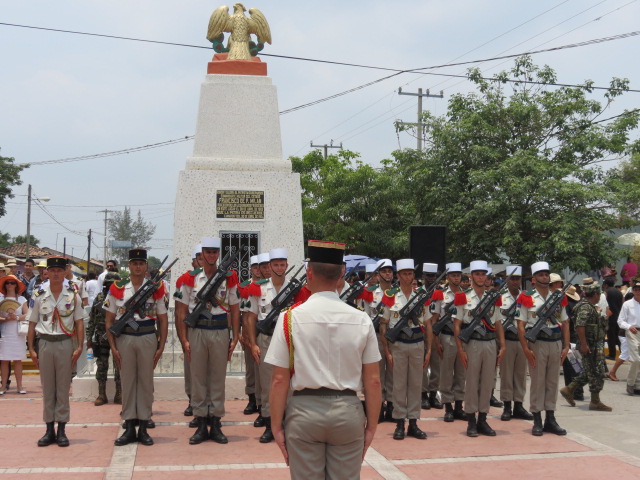
La Batalla de Camarón
THE COMBAT OF APRIL 30, 1863, AT CAMARÓN (VER.).
- ORIGINAL TEXT: GEN. M. PÉNETTE AND CAPT. J. CASTAINGT -
During the night of April 29 to 30, 1863, a company of the Foreign Regiment, the 3rd of the 1st Battalion, under the command of Captain DANJOU and Second Lieutenants VILAIN and MAUDET, received the mission of protecting the passage of a convoy of ammunition, weapons, and also three million francs in gold intended for the troops besieging Puebla, and headed via Paso del Macho toward Palo Verde.
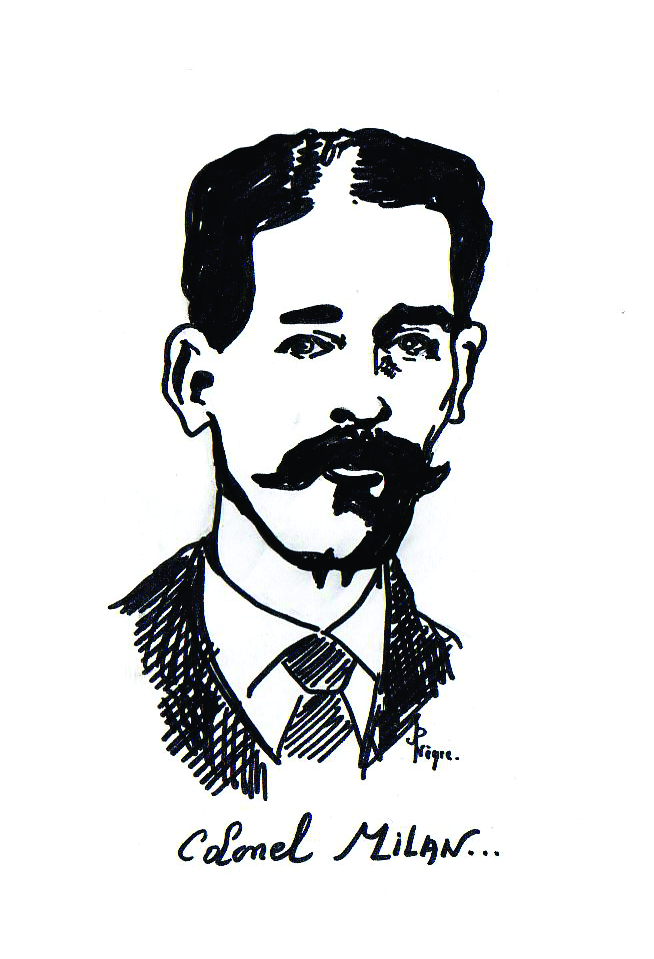
At seven o’clock in the morning, it encountered a cavalry force of the Brigade of the Center under the command of Colonel Francisco de PAULA MILÁN, governor of the state and military commander of the State of Veracruz, who had established his headquarters at La Joya, two leagues from the point of Camarón (formerly Temazcal, now Villa Tejeda).
After repelling the first two assaults with fixed bayonets, Captain DANJOU withdrew into a storehouse of the Trinidad hacienda, a league and a half from Palo Verde. Captain DANJOU quickly had the hacienda fortified and loopholes opened in the walls of the courtyard, which measured approximately fifty meters on each side. The battle began, and from the outset it left no hope for the besieged, whose commander knew well the old maxim: “A besieged square is a taken square.” And, knowing in advance the fate awaiting his men, he made them swear to defend themselves to the death.
They all swore it.
At ten-thirty in the morning, Colonel de PAULA MILÁN sent an emissary, Captain Ramón LAINÉ, from his staff. He was the son of a French citizen, captain of the port of Veracruz. He conveyed in French Colonel de PAULA MILÁN’s summons to the legionnaires to surrender.
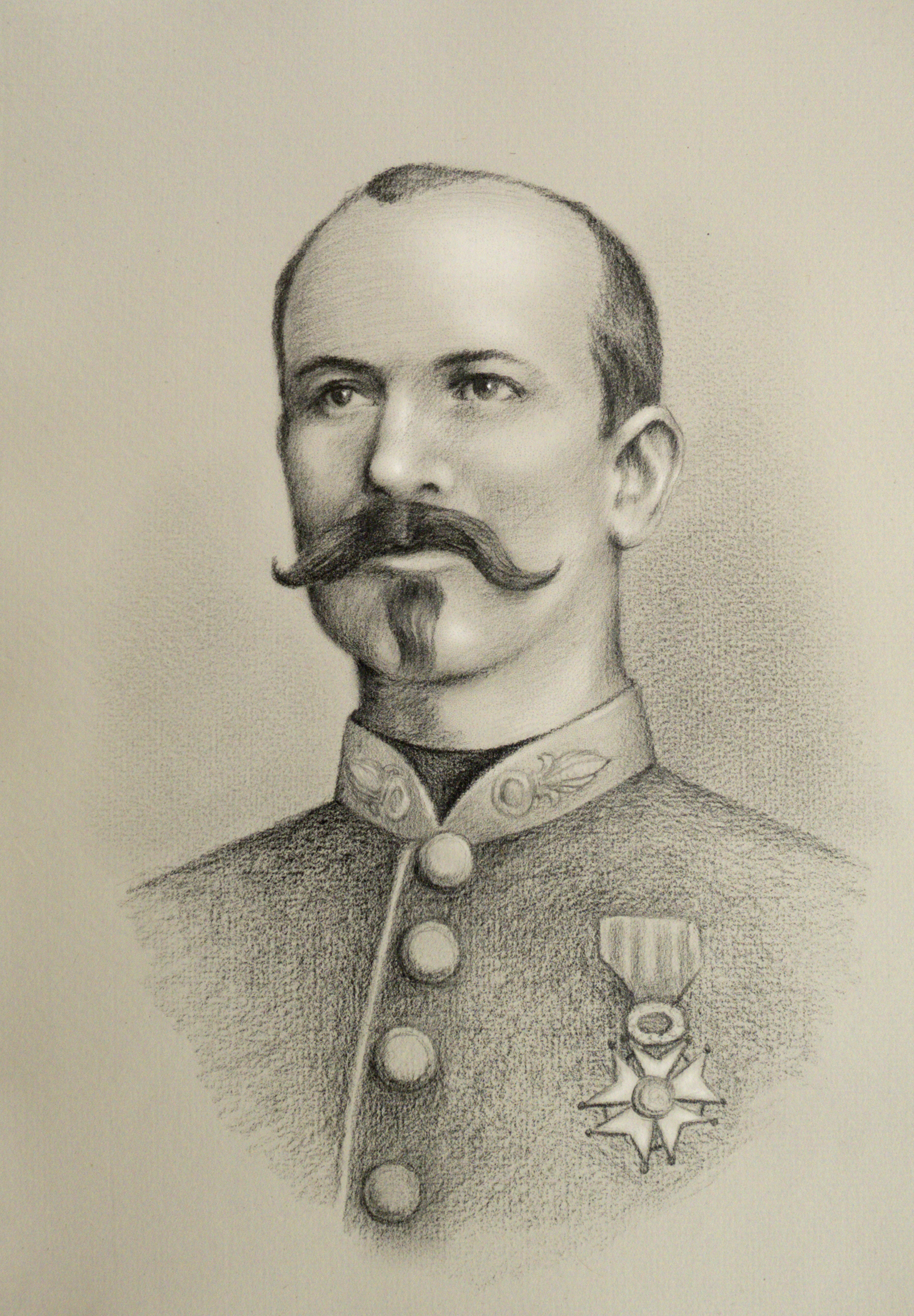
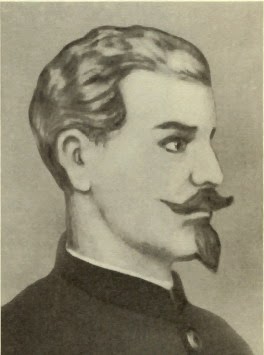
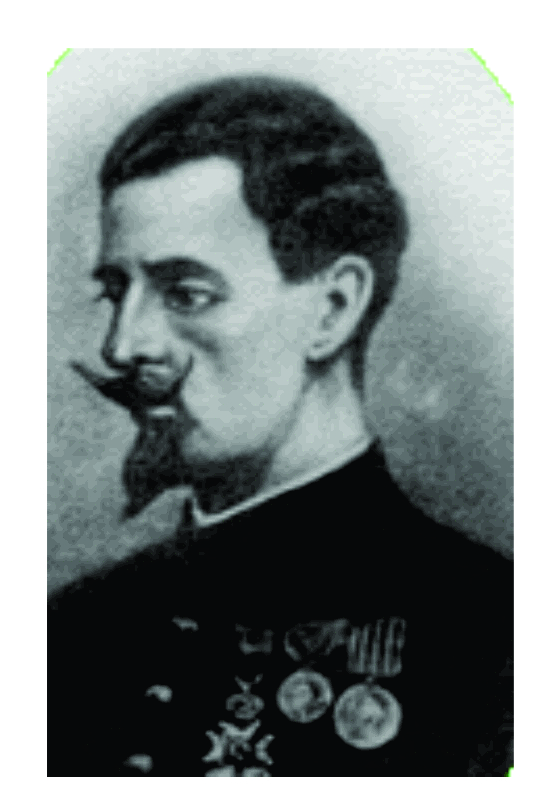
Captain DANJOU left no hope to the emissary: “We have enough cartridges and we will continue to fight.” A few moments later, Captain DANJOU died, and Second Lieutenant VILAIN took command.
Around noon, drums were heard, and the legionnaires believed it was reinforcements coming from Paso del Macho, where Captain SAUSSIER commanded a company of grenadiers from the same regiment, camped in the tower still known today as the “Fort of the French.”
They were soon disappointed; it was the infantry of the Brigade of the Center with its National Guard forces from Jalapa, Córdoba, Veracruz, Coscomatepec, and detachments from “several Indigenous villages.” At half past two, Second Lieutenant VILAIN died, and command passed to Second Lieutenant and standard-bearer MAUDET, who, a moment later, rejected a new summons to surrender from the enemy.
The battle continued fiercely and violently, the adversaries “dealing death to one another with fury,” and in the end, after a fight that a French historian described as a “battle of giants,” having sworn to defend themselves to the death, their ammunition exhausted, two of their officers dead and the third mortally wounded, leaving a total of 22 dead and 23 wounded on the field, the 3rd Company of the Foreign Regiment succumbed to the enemy’s superior numbers, after one final attempt in a bayonet assault that inflicted considerable losses on their opponents. The official French battle report mentions the names of two commanders and one officer,
Mexicans who distinguished themselves by the respect they showed toward the wounded and the prisoners; a procedure perhaps unique in the annals of military history, where it is more customary to remain silent about the humanitarian qualities of the enemy.

As we can see, this was an episode of limited scale. During the intervention campaigns, there were other examples of similar actions; and many more like it can no doubt be found in other military campaigns that gave rise to struggles between determined adversaries.
Why, then, has history granted it such particular treatment? Perhaps simply because it brought together all the essential elements of military courage: bravery, the will to prevail, contempt for sacrifice, fidelity in carrying out the mission, and feelings of humanity.
How could one fail to admire, with the greatest respect, the patriotism and fighting spirit of the National Guards and guerrillas hastily assembled by Colonel MILAN for this battle of annihilation? Assault after assault, wave after wave, the patriots of Veracruz hurled themselves against that bastion of irreducible fighters, accepting, in order to triumph, the loss of hundreds of their own men, dead or wounded.
Their opponents, the legionnaires, were traditionally an elite force, often considered the finest in the world. In 1863, they were especially battle-hardened. Many of them had first fought in Algeria, then in the Crimea in 1854, and finally in Italy in 1859. These were men who knew what combat meant, and if they could withstand the first summons to surrender at ten-thirty in the morning, the situation was different when, at noon, they saw the National Guard battalions arriving to tighten the encirclement.
They then knew they were lost. Yet no one protested when Second Lieutenant MAUDET, after the deaths of Captain DANJOU and Second Lieutenant VILAIN, rejected a new summons to surrender at half past two in the afternoon. And the battle continued until, at nightfall, the last three legionnaires still fit to fight were subdued.
The resistance was definitively crushed. What followed is particularly moving. Military honors were rendered to the survivors, of whom their victor, Colonel MILAN, said: “But these are not men, they are demons!”
Once the wounded had been comforted, Dr. Francisco TALAVERA, who throughout that day had commanded the battalion of the National Guard of Córdoba, returned to his vocation as a physician and treated the wounded who had been gathered by the edge of a small reservoir.
In Huatusco, where these wounded men were later taken, the population showed them the deepest feelings of humanity, and Second Lieutenant Clément MAUDET, before dying, speaking of the care given to him by a great lady, a true embodiment of Mexican womanhood, said:
“In France I left a mother; in Mexico I found another.”

Aftermaths
On the following July 14, at San Juan Coscomatepec, by mutual agreement between the staffs of both camps, the surviving prisoners of the Foreign Legion were exchanged for a Mexican leader, Colonel Manuel M. ALBA. From the legionnaires who were exchanged, it was learned that Colonel MILAN’s troops, and especially Colonel CAMBAS and Captain LAINÉ, had treated them very well.
The impression that dominates this war episode is the futility of the combat; yet the fighting continues.
For the Mexicans, once the encirclement was completed, their tactical objective had been achieved. They had left their adversary totally incapable of action. They knew that, simply by the passing of the hours, that position was theirs, and in the meantime they continued the assault without pause. The legionnaires, as has already been said above, had no hope left. Their military honor was safe, and no one could have judged them harshly if they had laid down their arms. Yet they fought on, quite simply because when one has the honor of wearing a military uniform and bearing a weapon, no one gives up as long as he can still use it.
At that moment, it seems as though something like an immense Goddess of Armies had taken shape in the clouds over the battlefield, as the symbol of that higher notion: “Fidelity to the Mission.”
A mission is given; it is accepted. Once accepted, it is carried out calmly, without allowing strange considerations of an intellectual or sentimental nature to obscure the will to obey.
The motive inspiring this fidelity was very different on each side. That of the Mexicans is easy to understand: the adversary is the invader, the one who represents imperialism and absolutism, the one who threatens individual liberties and national independence. The mission of the Mexicans is to harass him, attack him wherever he appears, and destroy him whenever that is opportune and feasible.
In the name of that great principle and that human driving force called liberty, the corpses are piled up before the walls of the hacienda. The motive of the legionnaires seems harder to understand. They are in that hell, which does not amount to even a tenth of a hectare: Germans, Belgians, Swiss, a Dutchman, a Dane, a Spaniard, an Austrian, two Italians, Poles, and Frenchmen.
Ideologically, what could this military adventure mean to them, decided by the ruler of a country which, in most cases, was not even theirs?
Their only moral bond is the promise they made to serve with honor and fidelity a flag under whose folds they chose to live, and whose homeland had generously welcomed them. And it is in order not to betray that oath, and because they had been given the mission to fight everywhere, to the very end, that one by one, in the courtyard of the storehouse of the Trinidad hacienda, they fell to the very end.
From the still-smoking ruins of the sheds in the courtyard, when at last silence falls, when the dead are gathered together and the wounded are evacuated, there emerges the sublime notion of Fidelity to the Mission, received and fulfilled unto the supreme sacrifice, in all the purity of full respect for duty, on both sides alike. Then the fame carried by countless mouths overtakes the historical fact itself, beginning with official consecration. It was decided that the name of the small ranch in the State of Veracruz, Camarón, with its phonetically French spelling “Camérone” given by the legionnaires themselves, would appear before any mention of any other famous battlefield on the flag of the 1st Foreign Regiment, and that the names of the three officers would be engraved in gold letters on the walls of the Palais des Invalides in Paris, not far from the tomb of Napoleon I.
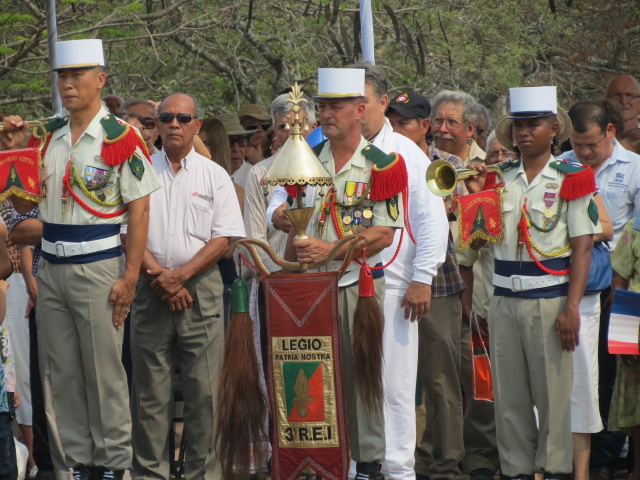
Later, the Foreign Legion, engaged in other theaters of operations, in France, in the Far East, and in the Indian Ocean, proudly recalled the firm determination of the sixty-two legionnaires of Camarón, and decided to choose April 30 as its annual holiday and solemn celebration of the Corps. Little by little, as their contracts expired, the legionnaires returned to their countries of origin in all parts of the world, taking with them the story of the battle, that of “the feat of Camérone,” which gradually and imperceptibly became a legend.
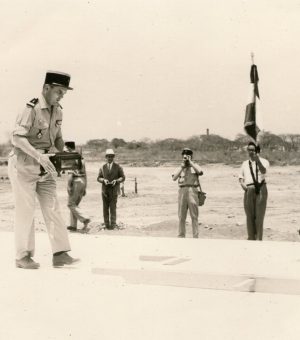
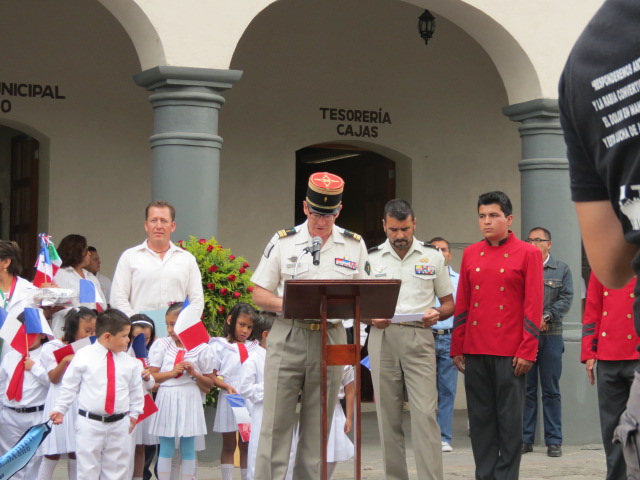
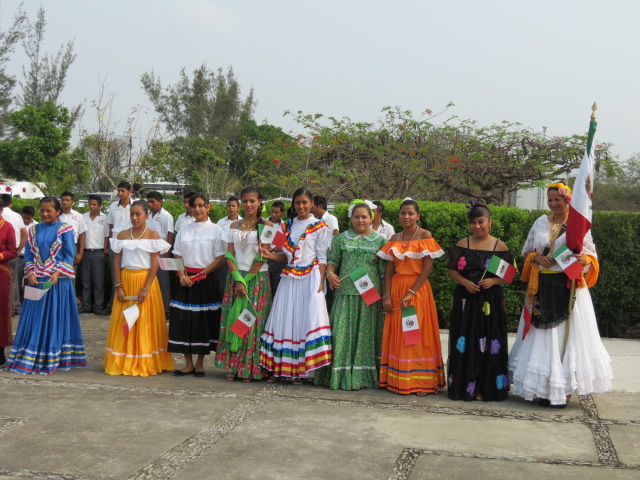
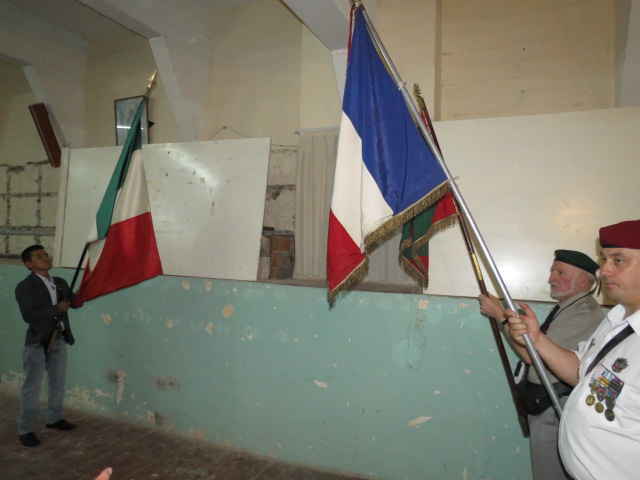
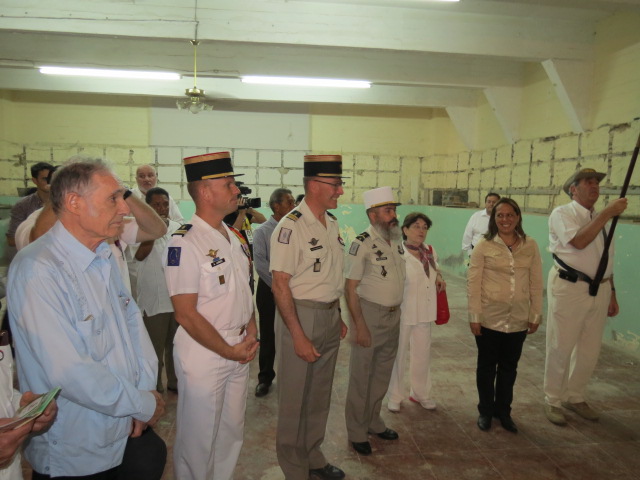
And thus, every April 30, sometimes in the most remote corners of the Earth, and in Mexico as well, former legionnaires gather, their minds for a moment detached from material concerns and the contingencies of daily life, and they assemble with fervor and silence in a sacred rite: that of “Camérone,” that of “Fidelity to the Mission,” the silent acceptance of the consummation of the supreme sacrifice... And once the excitement of battle has subsided and the wounds have healed, the friendship between two nations and two peoples reemerges and continues its harmonious development. Yet that would be too little to give the “act” of Camarón the character of a fervent and shared Franco-Mexican tribute to the memory of their heroes. That tribute must be shared by all men, of all countries and all times, from the age of the arrow to the interspatial age, who preferred to lose their lives rather than yield to force... thus preserving the true value of man, for the marvelous affirmation of the irresistible triumph of spirit over matter.