
Juana Marrero (1820-1894)
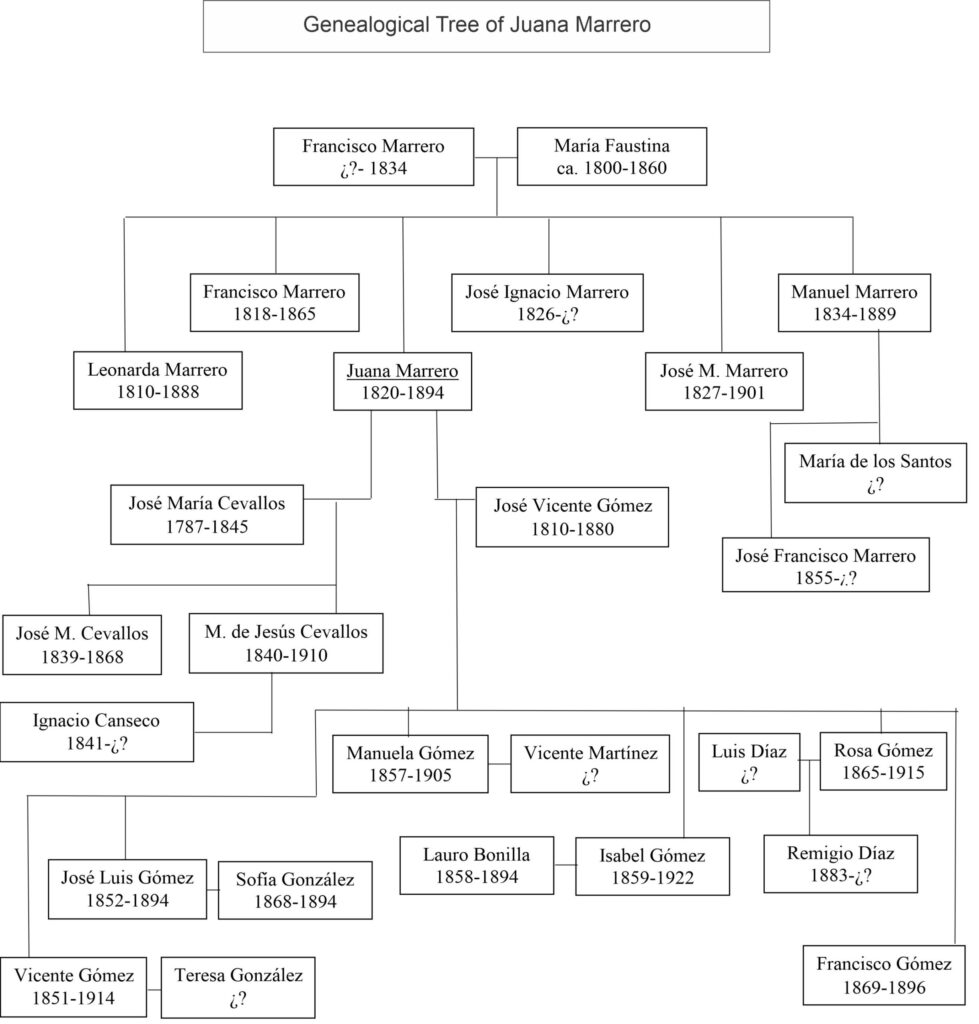
Juana Agustina Marrero Flores was born in Córdoba, Veracruz, on August 29, 1820, the daughter of Francisco Marrero (?-April 20, 1834) and María Faustina Flores (ca. 1800-1860), both Spanish. She was baptized in the parish church of the town, now the cathedral, but the family moved to Huatusco when she was four months old, which is why Juana claimed for the rest of her life to be originally from that town.
Juana Marrero was the third of six siblings:
- Leonarda Marrero Flores (Córdoba, 1810-Huatusco, May 8, 1888), married.
- José Francisco Braulio Marrero Flores (Córdoba, March 26, 1818-Tlaxopa, October 25, 1865), married on November 20, 1845 in Huatusco to Bonifacia Isidra Paz Pizarro (1830-?), originally from Chocamán. Francisco Marrero died on October 25, 1865 in the military action at Tlaxopa against an imperial column; he was buried in Huatusco.
- José Ignacio Marrero Flores (Huatusco, 1826-?), married on October 29, 1844 to María Polonia Pacheco Vallejos (1829-?).
- José María Marrero Flores (Huatusco, 1827-April 20, 1901), married on November 17, 1846 to María Josefa Ordoñez (Huatusco, 1820-ca. 1890), died of “influenza.” He lived at number 50 on Teatro Solleiro Street.
- Manuel Marrero Flores (Huatusco, 1834-February 9, 1889), married first to María de los Santos, with whom he had José Francisco del Pilar Marrero de los Santos (Huatusco, October 12, 1855-?), and married a second time on May 10, 1861 to María Petronila Carrasco Rodríguez (1835-?). He served under Colonel Honorato Domínguez during the French Intervention.
On May 19, 1838, at the age of 18, Juana Marrero entered into her first marriage with José María Cevallos Ávila (Mexico City, 1787-Huatusco, ca. 1845), son of José Antonio Cevallos and María Lorenzo Ávila, a resident of Huatusco since 1808 and widower of Victoriana García Gamboa since 1835. They had three children:
- José María de Jesús Cevallos Marrero (May 4, 1839-October 21, 1868). He died at the age of 29 from “pulmonary ailments,” unmarried.
- María de Jesús Silvestre Cevallos Marrero (December 31, 1840-July 16, 1910), married on June 18, 1870 to Ignacio Canseco Ortiz (1841-?), who served as political chief of Huatusco from 1892 onward.
- “One child who only received baptismal water” (September 18, 1843).
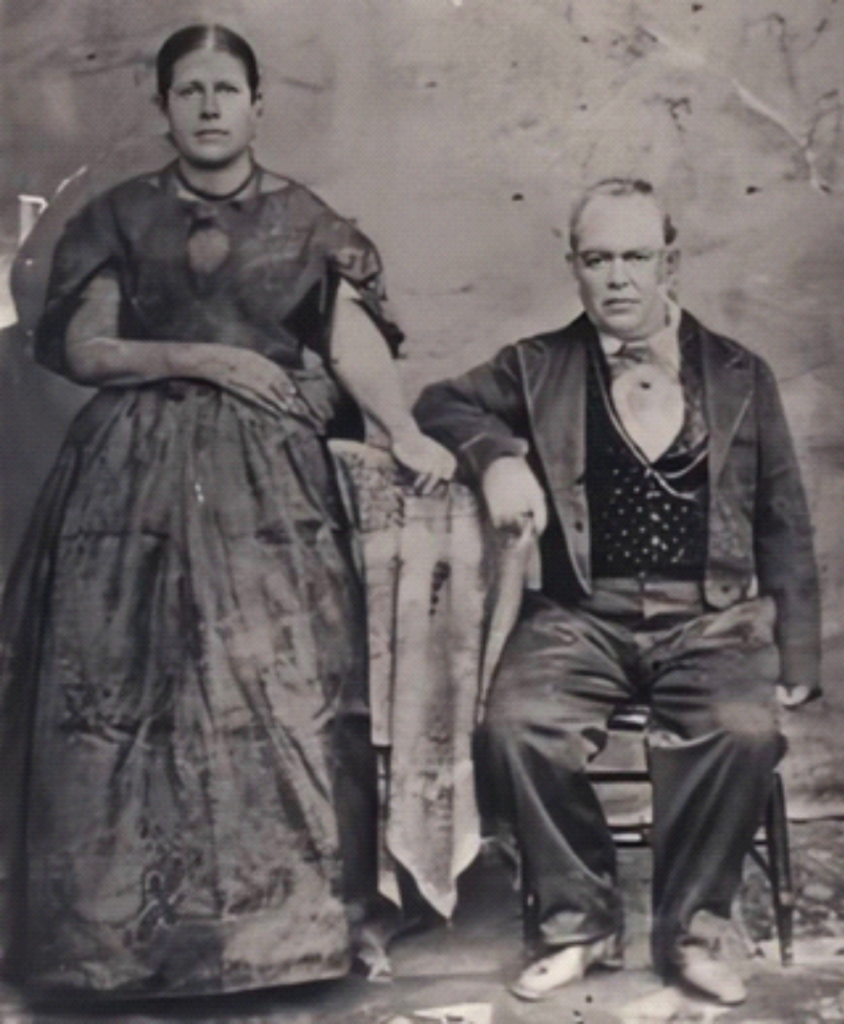
Juana Marrero was widowed around 1845 and on December 14, 1847 she married José Vicente Gómez (Huatusco, 1810-May 16, 1880), “non-Indigenous,” in a second marriage. They lived at numbers 39-40 on Progreso Street and had ten children, all born in Huatusco, although only six certainly reached adulthood:
- María Guadalupe Salomé de Jesús Gómez Marrero (October 23, 1848-December 15, 1859).
- Vicente Gómez Marrero (1851-March 29, 1914). Merchant, married to Teresa María de Jesús González.
- José Luis Mariano Gómez Marrero (July 29, 1852-February 23, 1894), married to Sofía González Morales (1868-April 5, 1894).
- María Josefa Modesta Gómez Marrero (February 24, 1856-?).
- Manuela Gómez Marrero (1857-April 12, 1905), married to Vicente Martínez, a municipal employee in Córdoba.
- José Francisco Gómez Marrero (1858-May 4, 1860).
- Isabel Filomena de Jesús Gómez Marrero (July 14, 1859-1922), married on April 5, 1894 to Lauro Bonilla Ricaño (1858-April 5, 1894).
- Manuel Eduardo Gómez Marrero (1860-August 2, 1864).
- Rosa Gómez Marrero (1865-January 9, 1915), married to Luis Díaz; son: Remigio Díaz Marrero (1883-?).
- Francisco Gómez Marrero (1869-February 3, 1896).
Juana Marrero died on September 11, 1894 at 9:00 a.m. in Huatusco, of a “heart attack,” according to the parish death record, or of “urethra” (urethritis?), according to the statement of physician Darío Méndez before the civil registry. She was 74 years old and was buried in the municipal cemetery.
Important considerations:
In total, Juana Marrero had 13 children in two marriages, of whom eight certainly reached adulthood, and possibly one more. In other words, she was pregnant for nearly 10 years of her life, at the very least. Having that many children became common in the mid-twentieth century, but at this time it was unusual and rather suggests a situation of privilege and relative comfort, thanks to which so many mouths could be fed.
Marrero’s life was marked by the death of her loved ones: she witnessed the death of almost all her siblings (4), of her two husbands, of at least four newborn or infant children, and of at least three of her adult children. She was very likely the universal heir of her first husband, José María Cevallos, who, given his association with “farmers,” according to the sources, probably leased or cultivated his own land. There is no evidence regarding the work of her second husband, José Vicente Gómez, but it is possible that he was engaged in trade or leasing.
On May 1, 1863, when Clément Maudet’s care was entrusted to Juana Marrero, she was 43 years old and her husband, José Vicente Gómez, was 53. It was a moment—not so common in her adult life—when she was not pregnant; however, in addition to dedicating herself to household work, she was in charge of five or six children: the youngest aged three and four, and the oldest 12. She had recently lost three children: José Francisco in 1860, María Guadalupe in 1859, and María Josefa in 1856. It is likely that the two children from her first marriage, then adults aged 24 and 23 respectively, were still living in her house in 1863, since José María apparently never married and would die five years later of “pulmonary ailments,” while María de Jesús did not marry until 1870, to Ignacio Canseco, a popular and influential local resident devoted to local politics, who would be appointed political chief in 1892 by Governor Teodoro A. Dehesa.
That said, I consider it highly unlikely that Juana Marrero had time to belong to the Company of the Daughters of Charity of Saint Vincent de Paul, which would also have required her to observe vows of chastity and poverty (in 1865 and 1869 she had two more children) and to wear a habit, which she does not wear in the photographs we know of her. It seems to me that the French version of the twentieth century added this to her profile because of the impression caused by the fact that she cared for a French officer who was close to death, and because there was an establishment of this congregation in Huatusco, to which she may indeed have donated money. There is no evidence in the sources regarding this supposed affiliation.
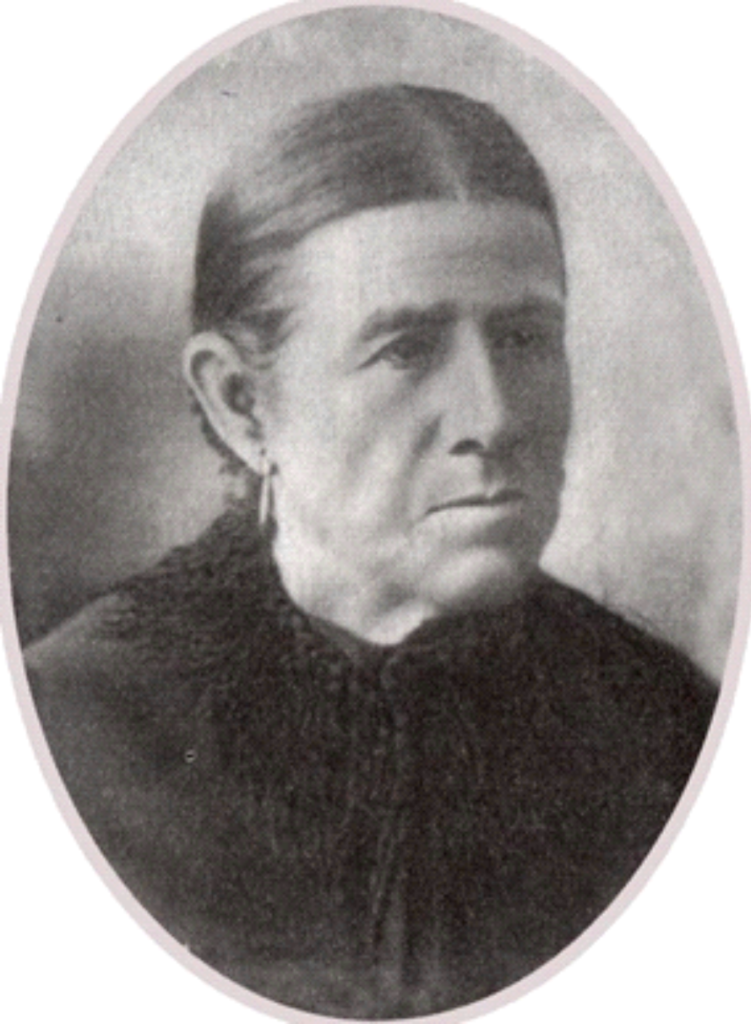
Portrait of Juana Marrero
circa 1870-1890
Family collection.
Juana Marrero and José Vicente Gómez (attrib.)
circa 1850-1870
“Order of Guadalupe” (Facebook group)
The guerilla of Francisco Marrero and Manuel Marrero
The brothers José Francisco Braulio Marrero Flores and Manuel Marrero Flores, both holding the rank of officer, belonged to the Huatusco National Guard under the command of Lieutenant Colonel Marcos Heredia. Heredia’s force formed part of Colonel Honorato Domínguez’s guerrilla, which had operated against the French army since 1862, although it also pursued profit through cattle rustling and robbery of merchants. The Marrero brothers took part in the Battle of Camarón and in other military engagements of 1862 and 1863 as members of the Huatusco National Guard.
In the second half of 1863, after the French army took Puebla, an imperial column occupied Huatusco, established a government, and expelled the republican forces from the region. In 1864 many republicans accepted amnesty—possibly the Marrero brothers as well—and Domínguez moved his center of operations to the line of Paso de Ovejas, Actopan, and La Antigua. However, in mid-1865, the withdrawal of the French army toward central and northern Mexico, together with the reduction of imperial garrisons in the central part of the state of Veracruz, made it easier for the republican general Ignacio Alatorre to form a strong contingent of 600 soldiers based in Tlapacoyan, with which he threatened the Xalapa line. This caused the imperial forces to concentrate in Xalapa for better defense and to abandon several surrounding towns, including Huatusco. Those towns in turn fell into the hands of republican troops who once again rose up and recognized Honorato Domínguez as their superior.
In September 1864, a group of residents of Tepetlaxco rose up against the Empire, and Commander Francisco Marrero, after having been absent from the scene for months, took the opportunity to form a force in the vicinity of Huatusco, to which his brother Manuel probably joined himself. The absence of imperial troops allowed him to hold out and take control of the region: the few soldiers of the Coscomatepec Civil Guard took refuge in Huatusco, so the imperial garrison there, increased to 30 soldiers, hastily dug trenches for defense. On September 28, 1865, Marrero attacked Huatusco by surprise: he approached undetected, and the 30 Civil Guard soldiers withdrew from the trenches to the parish church, but several defected to the republicans. They resisted for eight hours, until their commanding officer was killed and the rest were taken prisoner. After capturing Huatusco, Marrero requisitioned horses and mules from the residents, prohibited the sale of liquor to prevent disorder, imposed a loan of 2,000 pesos, and withdrew that same afternoon to La Pitaya so as not to be attacked.
The guerrillas operating from Paso del Macho to Veracruz, such as that of Commander Sotomayor, subordinated themselves to Marrero, who remained on the lookout around Orizaba and Huatusco, living off plunder. According to an imperial report, he came to command 140 infantry soldiers and 80 horsemen. On October 23, Marrero took the town of Necoxtla, where his troops murdered two men and two women for defending their interests and “committed excesses.” Two days later, Captain Kalmucky, with 30 Austrian hussars and 25 men from the Orizaba Mobile Guard, surprised Marrero at Tlaxopa, where Marrero died in personal combat against Kalmucky. Seven of his men also fell; the force was pursued to within two leagues of Huatusco and dispersed.
It is likely that Manuel Marrero withdrew into private life or recognized the Empire, since in March 1867 an individual bearing his surname was serving as head of the garrison of the port of Veracruz, the last imperial stronghold. However, it is also likely that he returned to the struggle with the republicans in mid-1866, because it is known that another person bearing the surname Marrero fought in Alatorre’s ranks during those months, when republican ranks increased dramatically due to the withdrawal of the French army.
Hector Strobel
Sources:
- Archive of the Parish of the Immaculate Conception of Córdoba
Baptismal registers. - Archive of the Parish of Saint Anthony of Padua, Huatusco
Baptismal, marriage, and death registers. - Archive of the Civil Registry of the State of Veracruz
Birth, marriage, and death registers of Huatusco. - “Defeat of Marrero and Figueroa,” in El Diario del Imperio, November 3, 1865, p. 1.
- Rivera Cambas, Manuel, History of the European and North American Intervention in Mexico and of the Empire of Maximilian of Habsburg, 3 vols., Tipografía de Aguilar e hijos, Mexico City, 1888-1895.
- Strobel, Héctor, Xalapa during the French Intervention and the Second Empire, 1861-1867, 2nd ed., Xalapa, City Council of Xalapa, 2023.